
Should you pay for Google Ads, or put the money into SEO? Both put you in front of people who are searching for what you sell. They behave very differently once you start spending, though, and picking the wrong one for your situation is one of the most common ways small budgets get wasted.
This comparison covers speed, cost profile and durability, which one suits which kind of business (with a decision table), and how AI search is changing the picture in late 2026. If you would rather have the organic side handled for you, that is what our SEO, AEO and GEO service covers.
Should a small business choose Google Ads or SEO?
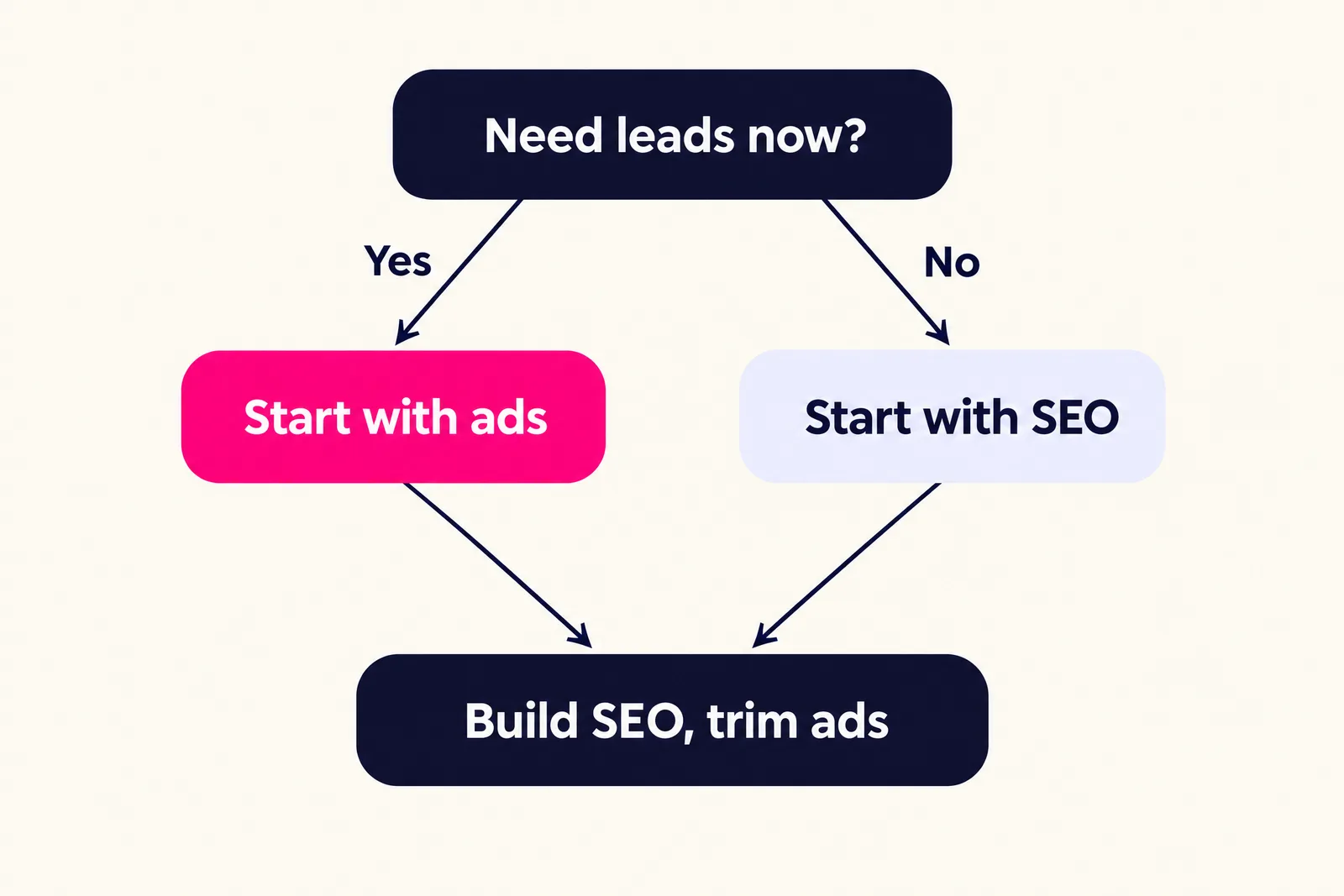
If you need enquiries this month, start with Google Ads. If you can wait a few months and people already search for what you do, put your effort into SEO. Most growing businesses end up running both, with ads carrying the load early and SEO taking over more of it as it matures.
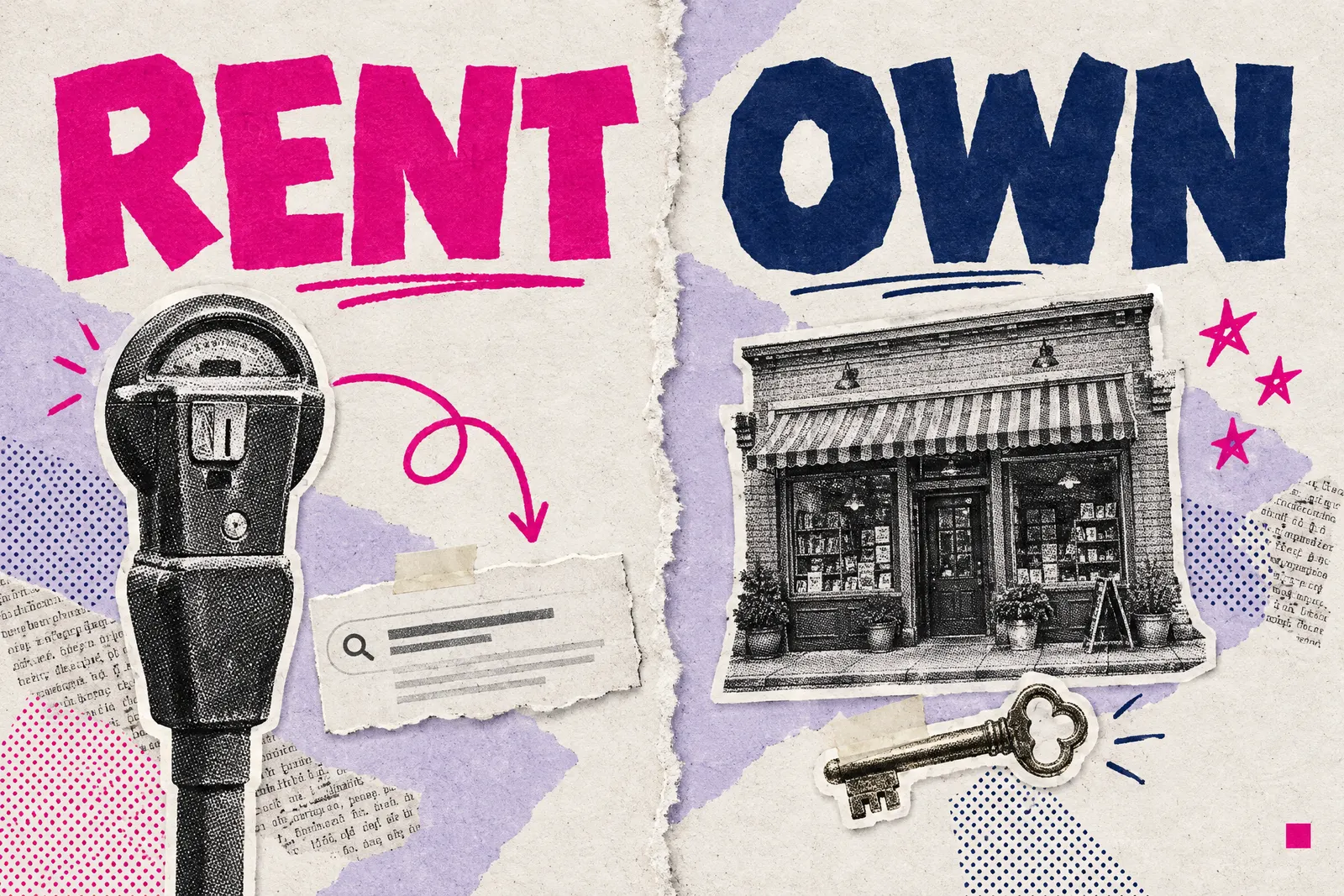
The useful way to think about it is renting versus owning. Google Ads rents you a position at the top of the page: you pay for every click, and the moment you stop paying, you disappear. SEO builds a position you own: slower and harder to earn, but it keeps sending people to you without a charge per visit.
Neither is better in the abstract. The right answer depends on how quickly you need leads, how much cash you can put in before you see a return, and how competitive your searches are.
What is the real difference between Google Ads and SEO?
Google Ads is an auction: you bid on searches and pay when someone clicks your ad. SEO is the work of making your website and Google Business Profile the most useful, trustworthy answer, so Google chooses to show you without payment.
Here is how the two compare on the things that matter to a small business.
| Factor | Google Ads | SEO |
|---|---|---|
| Speed to first enquiry | Days, once the campaign is approved and tracking works | Usually months, depending on competition and your starting point |
| Cost profile | Pay per click, plus set-up and management time | Time, content and technical work up front, with no charge per visit |
| When you stop | Traffic stops the same day | Rankings fade slowly, often over months |
| Control | High: choose searches, locations, hours and budget | Lower: Google decides who ranks |
| Testing | Fast feedback on which offers and messages convert | Slow feedback, but each page keeps working once it ranks |
| Trust | Labelled as sponsored, which some searchers skip | Organic and map listings carry earned credibility |
| AI search | Ads are moving into AI answers, but are still a paid placement | The same work helps you get cited in AI Overviews and assistants |
Worth knowing: the two feed each other. Your ad search terms report shows exactly which phrases turn into enquiries, which is the best possible brief for the pages your SEO should build next.
How quickly does each one bring in enquiries?
Google Ads can produce enquiries within days of going live. SEO typically takes months before it brings a steady flow, and longer in crowded markets or on a brand new website.
Ads are fast because you are buying visibility directly. The realistic delay is set-up: choosing keywords, writing ads, building a landing page and, most importantly, getting conversion tracking right so you know which clicks turn into calls and forms. Skip the tracking and you are spending blind.
SEO is slower because Google needs to find, understand and trust your pages before it ranks them against businesses that have been there for years. How long that takes depends on three things: how competitive your searches are, how strong your site and reviews already are, and how consistently you publish useful pages. A plumber with a decent site and good reviews in a mid-sized town can see map pack movement far sooner than a new solicitor in a big city.
Where this goes wrong: businesses start SEO, see little in the first few weeks and stop, which means they pay for the slow part and never reach the part that compounds.
What does each one cost a small business?
Google Ads costs your click spend plus whatever you pay for set-up and management. SEO costs time or a monthly fee, with no charge per visitor. The bigger difference is how each cost behaves over time.
Click prices vary hugely by sector. There is no official UK-wide figure, but UK estimates compiled by Whito in November 2026 put most small businesses at roughly £1.50 to £2.50 a click, home services around £3.20 and legal services around £8.25. In the US, WordStream's 2026 benchmarks put the median cost per lead across industries at $66.69, rising to $90.92 for home and home improvement. Treat them as a rough sense check: your own costs depend on your keywords, location and how well your landing page converts.
| Cost question | Google Ads | SEO |
|---|---|---|
| What you pay for | Clicks, plus set-up and ongoing management | Technical fixes, content, local listings and links |
| How cost behaves | Rises in line with the traffic you buy | Front-loaded, then the cost per enquiry tends to fall as rankings grow |
| Biggest hidden cost | Wasted clicks from poor targeting or a weak landing page | Months of effort on keywords that were never going to convert |
| Risk if budget is cut | Leads stop immediately | Leads decline gradually |
A practical test: if one new customer is worth a lot to you (a kitchen fit, a legal case, a commercial contract), paying a few pounds a click is easy to justify. If each sale is small, ads can swallow the margin, and SEO usually makes more sense as the long-term channel.
Which works better for your type of business?
Urgent, high-value services lean towards ads; researched, repeat or local services lean towards SEO; most businesses need a mix. The table below is a starting point for the conversation, based on how searches in each category tend to behave.
| Business type | Lean towards | Why |
|---|---|---|
| Emergency trades (locksmiths, drainage, boiler repair) | Ads plus Google Business Profile | Searchers want someone now and call the first credible result |
| Planned home services (kitchens, landscaping, roofing) | Both, shifting to SEO | High job values justify ads early; buyers research, so helpful pages and reviews win over time |
| Professional services (accountants, solicitors, consultants) | SEO first, ads for specific services | Trust and expertise matter; clicks are expensive, so target ads narrowly |
| B2B with long sales cycles | SEO and content | Buyers research for weeks and compare options; ads suit specific, high-intent terms |
| Ecommerce | Both | Shopping ads drive sales quickly; category and product pages build organic sales |
| Brand new business or website | Ads first, SEO from day one | You need early enquiries while the site earns trust |
| Niche service few people search for | Neither on its own | Low search demand limits both; outbound, referrals and content for AI answers matter more |
Best for: the businesses that get the most from this decision are the ones that write down what a customer is worth and how many they need each month before choosing. That single sum tells you how much you can afford to pay for a lead.
How does AI search change the Google Ads vs SEO decision?
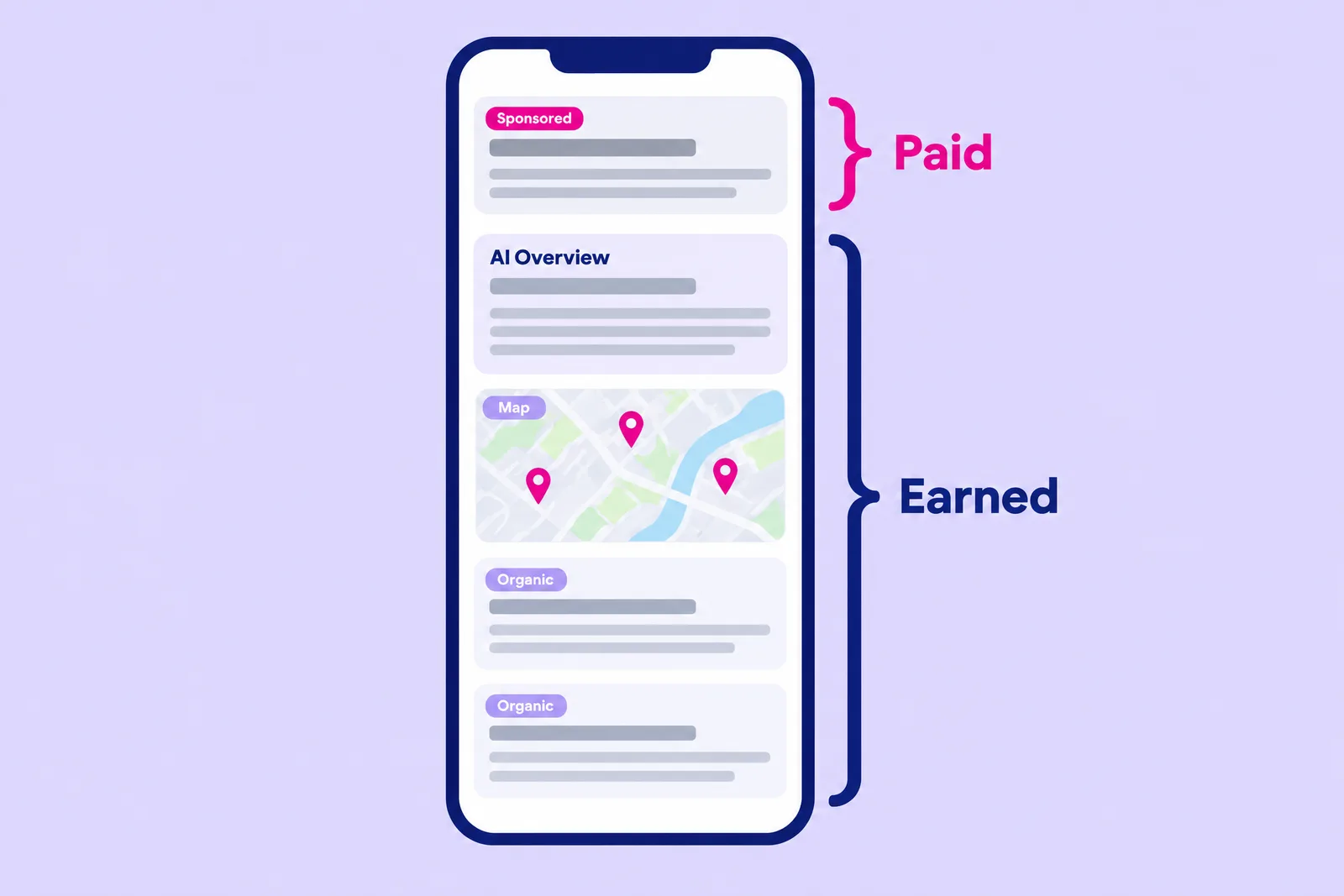
AI search makes organic clicks harder to win on question-style searches, and it is pulling ads into AI answers too. For a small business, that shifts SEO towards being the source AI tools cite, and makes high-intent commercial searches more valuable on both channels.
The evidence is building. A randomised field study by researchers at the Indian School of Business and Carnegie Mellon, reported by Search Engine Journal in April 2026, found that AI Overviews cut outbound organic clicks by 38% on the searches where they appeared, while sponsored clicks held steady. Seer Interactive's analysis, covered by PPC Land, found that on informational searches with an AI Overview, organic click-through rates fell by about 61% and paid click-through rates by about 68%. The same analysis found brands cited in the AI Overview earned more clicks than those that were not, though the authors say they cannot prove the citation caused it.
Ads are following the answers. Google has been expanding ads inside AI Mode, and Search Engine Roundtable reported on 28 October 2026 that the UK is scheduled to get them this quarter.
What this means in practice:
- Information searches (how, why, what is) are losing clicks. Content still matters there, because it is how AI tools learn to cite you, so judge it on citations and enquiries as well as traffic.
- Commercial and local searches (a service plus a town, a service plus a price) still send clicks, and that is where ads and map pack rankings compete hardest.
- SEO now includes AI visibility. Clear service pages, consistent business details, reviews and plain answers help you rank and help AI assistants recommend you. We explain the method in how to get recommended by ChatGPT.
How should you split a budget between Google Ads and SEO?
Start heavier on ads while SEO builds, then move budget across as organic enquiries grow. Base each shift on your own tracked numbers.
- Get tracking right first. Calls, forms and bookings should all be measured in GA4 and Google Ads before you spend properly, so you can compare the two channels on cost per enquiry.
- Run tight ads on your best services. Exact and phrase match on high-intent searches, a clear landing page and a list of negative keywords. Our guide on landing pages versus your website for Google Ads covers where to send the clicks.
- Build SEO from the ads data. Turn the search terms that convert into proper service and location pages, and fix the basics covered in how to get found on Google.
- Review monthly and shift gradually. As organic and map enquiries rise for a service, reduce ad spend on that service and keep ads for the gaps: new services, competitive terms and busy seasons.
Ads rarely go to zero for good. Many businesses keep some paid search running for brand protection, seasonal pushes and the services where organic rankings are hardest to win.
Where should a city-based business targeting local customers start?
Start with your Google Business Profile and a strong service page for each main service, then add local ads for your highest-value jobs. Map pack listings are often the first thing a local searcher sees, and they cost nothing per click.
For example, for most companies in Cardiff and South Wales, competition for local searches is real but far lighter than in London, which makes organic visibility achievable within a sensible timeframe. Pest & Property Solutions, a Cardiff pest control company, is a useful example: its new site went live in June 2026 and recorded 112 enquiries in its first 36 days, with 82.7% of enquiries coming from Google organic search, supported by 344 Google reviews. Those figures come from our own client reporting, and the full story is in the Pest & Property case study. For the local detail, see our guide to SEO in Cardiff and the map pack.
The same approach applies in Manchester, Bristol or Leeds: own the local listings first, then use ads to fill the gaps while the organic side catches up.
What mistakes waste money on Google Ads and SEO?
Most wasted budget comes from a handful of avoidable mistakes on each side. Fix these before you spend more on either channel.
Google Ads
- Sending paid clicks to the homepage instead of a page built for that search.
- Broad match keywords with no negative list, so you pay for irrelevant searches.
- No conversion tracking, or tracking that counts page views as leads.
- Letting the default settings show ads across the whole country when you only serve one area.
SEO
- Chasing broad, high-volume keywords that never turn into enquiries.
- One generic services page instead of a page for each service.
- Neglecting the Google Business Profile and reviews, which carry much of your local visibility.
- Stopping after a few months, just before the work starts to compound.